

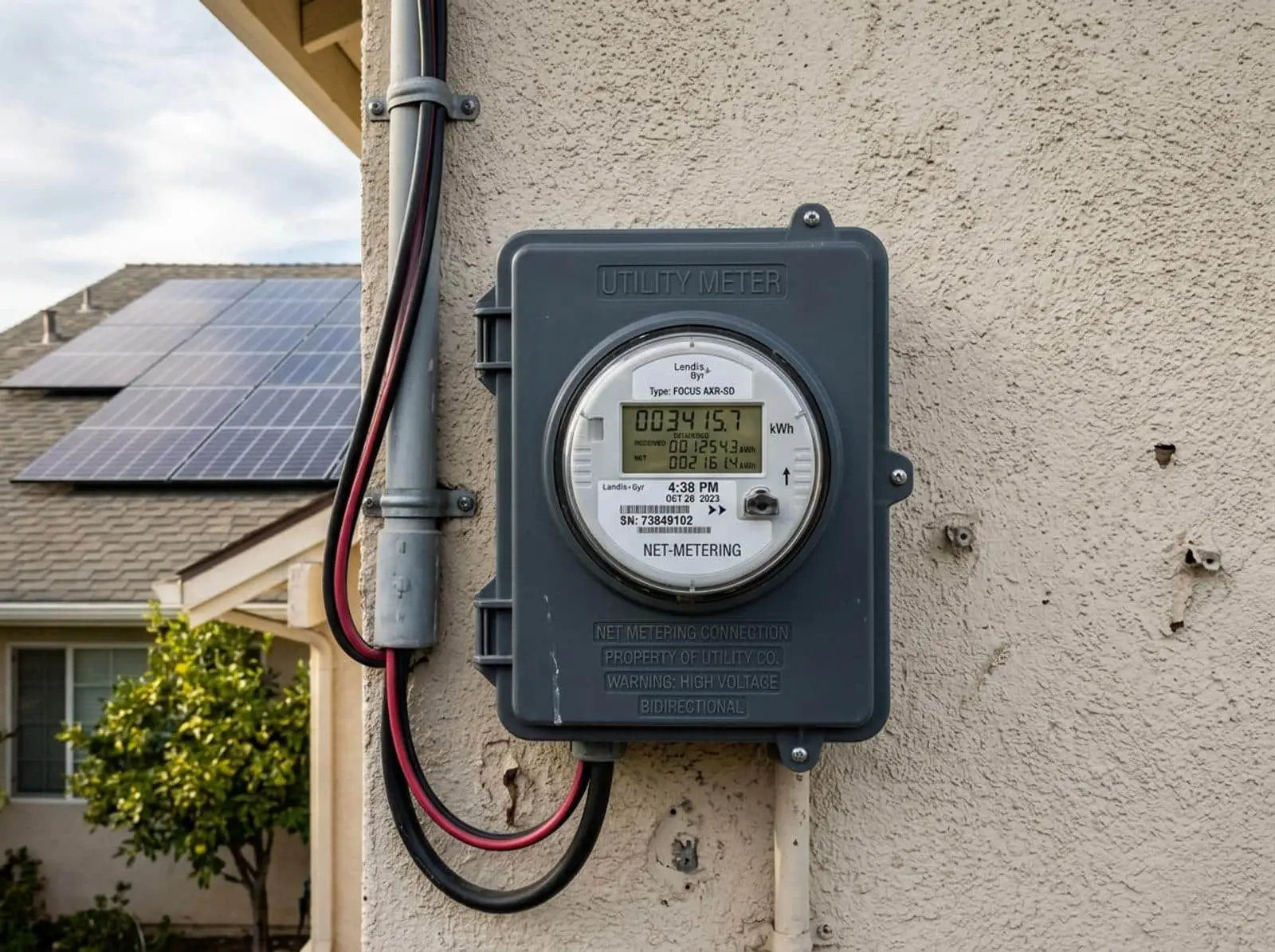
Updated 23 September 2026 — the rules changed this year. On 9 February 2026, NEPRA notified the Prosumer Regulations 2026, which replaced net metering with net billing for all new solar connections. Under net billing the units you import are charged at the normal slab tariff, while the units you export are bought back at roughly PKR 8.13 per unit instead of the previous PKR 25.32. New licences also run for five years rather than seven. Anyone who signed a net metering agreement before 9 February 2026 keeps the old rate until that contract expires. The practical consequence: a zero bill is no longer a realistic target for a new installation. The saving now comes mainly from using your own generation during daylight hours, not from exporting. Everything below about eligibility, documents and the LESCO application process still applies. Source: Profit / Pakistan Today, 10 February 2026
With electricity tariffs in Pakistan rising steadily every quarter, installing a rooftop solar power system is no longer just about surviving daily load shedding — it is about financial survival. For homeowners, commercial plaza owners, and industrial units across Lahore, Shahdara, and Ferozewala, net metering — and, since February 2026, its replacement net billing — is the mechanism that decides how much of your investment comes back to you.
However, despite its immense popularity, net metering remains one of the most misunderstood aspects of solar installation in Pakistan. Misconceptions regarding automatic approval, eligibility requirements, and utility billing procedures often lead to unexpected delays and frustration.
In this definitive guide, the engineering team at SG Solar Solutions breaks down exactly how net metering works in Pakistan under NEPRA regulations, step-by-step LESCO application procedures, required documentation, realistic financial payback math, and common pitfalls to avoid.
What is Net Metering and How Does It Work in Pakistan?
Net metering is a billing mechanism governed by the National Electric Power Regulatory Authority (NEPRA) that allows grid-tied and hybrid solar system owners to export surplus electricity generated during daylight hours back into the national grid (such as LESCO, FESCO, or IESCO).
                      +-------------------+
                      | Solar PV Panels   |
                      +---------+---------+
                                | (DC Power)
                                v
                      +-------------------+
                      | Hybrid / On-Grid  |
                      | Inverter System   |
                      +---------+---------+
                                | (AC Power)
           +--------------------+--------------------+
           |                                         |
           v                                         v
+-----------------------+                 +---------------------+
| Home Consumption Loads|                 | Bi-Directional      |
| (ACs, Fans, Lights)   |                 | Net Meter (LESCO)   |
+-----------------------+                 +----------+----------+
                                                     |
                                                     v (Export Units)
                                          +---------------------+
                                          | National Grid Network|
                                          +---------------------+
The Bi-Directional Meter:
Your standard single-direction LESCO electric meter only calculates the units you consume from the grid. When net metering is approved, LESCO replaces your standard meter with an approved green bi-directional meter (or digital electronic meter) that features two distinct registers:
- Import Register (kWh): Measures electricity drawn from LESCO during peak hours, rainy days, or nighttime.
- Export Register (kWh): Measures excess solar electricity pushed into the grid when your rooftop panels produce more power than your home is consuming.
At the end of your billing cycle, LESCO subtracts your total exported units from your imported units. If you export more power than you import, your credit carries over to subsequent billing months.
Step-by-Step LESCO Net Metering Process & Timeline
Navigating utility approvals in Pakistan requires technical precision and proper documentation. Here is the realistic step-by-step process followed for homes and businesses in Shahdara, Ferozewala, and Lahore:
| Phase | Description | Responsible Party | Estimated Timeline |
|---|---|---|---|
| Phase 1: Technical System Sizing | System design (min 3-phase, 3kW+), single-line circuit diagrams & structural stability checks | Solar Installer | 1 to 2 Days |
| Phase 2: File Preparation & Submission | Compilation of CNIC, paid LESCO bills, ownership documents & formal NEPRA application forms | Solar Installer & Client | 2 to 3 Days |
| Phase 3: Sub-Division Verification | Site inspection by LESCO SDO/XEN, transformer load capacity verification & NOC issuance | LESCO Field Team | 7 to 14 Days |
| Phase 4: NEPRA License Generation | Generation of official Distributed Generator (DG) license from NEPRA office | NEPRA & LESCO | 7 to 10 Days |
| Phase 5: Bi-Directional Meter Testing | Meter purchasing, calibration, & accuracy testing at LESCO Meter Testing Lab | LESCO Lab & Installer | 5 to 7 Days |
| Phase 6: Meter Installation & Activation | Physical installation of green net meter, commissioning, & net billing activation | LESCO Sub-Division | 2 to 4 Days |
📌 Total Estimated Timeline: From initial application submittal to final bi-directional meter activation, the entire net metering workflow takes approximately 4 to 6 weeks. Be wary of contractors claiming instant 3-day net metering — utility approvals follow strict administrative procedures outside any installer’s direct control.
Net Metering Eligibility Criteria in Pakistan
To qualify for net metering under current NEPRA rules in LESCO jurisdiction, your property must satisfy specific technical prerequisites:
- Three-Phase Grid Connection: Net metering is strictly available for consumers with a Three-Phase 400V electrical connection. Single-phase connections are not eligible for net metering. If your home currently has a single-phase connection, SG Solar Solutions assists you in applying for a 3-phase meter upgrade with LESCO first.
- Sanctioned Load Matching: The total capacity of your installed solar inverter must not exceed the sanctioned load listed on your LESCO electricity bill. If your inverter capacity is larger than your sanctioned load, a load extension application must be processed concurrently.
- NEPRA Approved Inverters: Only grid-tied or hybrid inverters certified under NEPRA’s approved manufacturer list (e.g., Growatt, Knox, Inverex, Nitrox, Solis, Fronius) are permitted for grid export connection.
- Transformer Capacity Limit: The total solar net metering capacity connected to a specific distribution transformer cannot exceed 80% of that transformer’s total kVA rating.
Documentation Checklist for Homeowners
When preparing your net metering file with SG Solar Solutions, ensure you have clear copies of the following documents:
- 📄 Copy of Property Owner’s CNIC (Computerized National Identity Card)
- 📄 Copy of Latest Paid LESCO Electricity Bill (showing 3-phase connection)
- 📄 Property Ownership Proof (Registry, Fard, or Allotment Letter)
- 📄 No Objection Certificate (NOC) from landlord if the property is rented
- 📄 Completed NEPRA Schedule-I Application Form
- 📄 Single-Line Diagram (SLD) prepared and stamped by a PEC-certified electrical engineer
- 📄 Technical data sheets and test certificates of panels and inverter
Learn more about our turnkey LESCO net metering application & filing services in Shahdara, Ferozewala, and Lahore.
Realistic Financial ROI: How Much Can You Save?
Let’s examine a real-world financial breakdown for a typical 10kW Hybrid Solar System installed on a 10-Marla or 1-Kanal residence in Shahdara or Lahore:
Average Daily Solar Generation (10kW System):   40 to 45 Units (kWh)
Average Daily Home Consumption (Daytime):       15 to 20 Units (kWh)
Average Daily Excess Exported to LESCO:         25 to 30 Units (kWh)

Monthly Exported Units to Grid:                ~750 to 900 Units
Monthly Bill Reduction (Import Offset + Export Credit):  PKR 65,000 – PKR 85,000+
With current electricity tariffs including peak-hour charges, fuel price adjustments (FPA), and heavy government taxes, a properly sized 10kW system typically recovers its entire capital cost within 3 to 3.5 years. For larger 15kW and 20kW residential setups, explore our detailed 5kW vs 10kW vs 20kW solar system comparison guide.
Common Net Metering Myths Debunked
Myth 1: “Net metering eliminates load shedding instantly.”
Reality: Net metering is purely an accounting framework with your utility provider. Standard on-grid inverters actually turn off during grid load shedding to protect utility lineworkers (anti-islanding safety). To enjoy uninterrupted power during outages while keeping net metering active, you must install a hybrid solar inverter with battery backup.
Myth 2: “LESCO pays cash into my bank account every month.”
Reality: LESCO credits your exported units against your imported units on your monthly bill statement. Financial settlement occurs on a quarterly or annual cycle per NEPRA rules, where net surplus credits are settled according to applicable baseline buy-back rates.
Myth 3: “Net metering becomes active on the day panels are mounted.”
Reality: Your system can generate solar power for immediate home use right after physical installation. However, exporting power to the grid and receiving bill credits only begins after the green bi-directional meter is officially commissioned by LESCO. Read our post on common solar myths in Pakistan to avoid common setup errors.
Frequently Asked Questions (FAQs)
Q1. Can I apply for net metering if my LESCO connection is single-phase?
No, NEPRA rules mandate a 3-phase connection for net metering. However, our team can handle your LESCO 3-phase meter upgrade application alongside your solar installation.
Q2. Is there a fee charged by LESCO for net meter installation?
Yes, LESCO charges official fee vouchers for bi-directional meter testing, NOC processing, and meter equipment. These fees are paid directly via bank draft to LESCO and are included transparently in our turnkey service quote.
Q3. What happens to my excess exported units in winter when solar production drops?
Net metering credit units accumulate on your account. Credits generated during sunny summer months offset higher winter gas/electric heating loads or lower winter generation periods.
Q4. What is the minimum solar system capacity required for net metering?
Under NEPRA regulations, the minimum recommended inverter capacity for net metering eligibility is 3kW on a 3-phase connection.
Q5. Can commercial businesses and factories apply for net metering in Ferozewala & Shahdara?
Yes, commercial B-Type connections (B1, B2, B3) for factories, mills, shops, and private schools qualify for commercial net metering. View our specialized commercial & industrial solar services.
Ready to Zero Your LESCO Bill with Net Metering?
Do not let complicated paperwork stand between you and financial energy independence. SG Solar Solutions provides complete turnkey solar installation and end-to-end LESCO net metering filing across Shahdara, Ferozewala, Kot Abdul Malik, Begum Kot, Al Rehman Garden, and Lahore.
- 📞 Speak with a Certified Engineer: 0318 0637648
- 🏢 Local Office: Ferozewala & Shahdara, Punjab, Pakistan
- 🌐 Explore Net Metering Services: https://www.sgsolarsolutions.pk/services/net-metering-lesco/